1 INDICATION AND USAGE
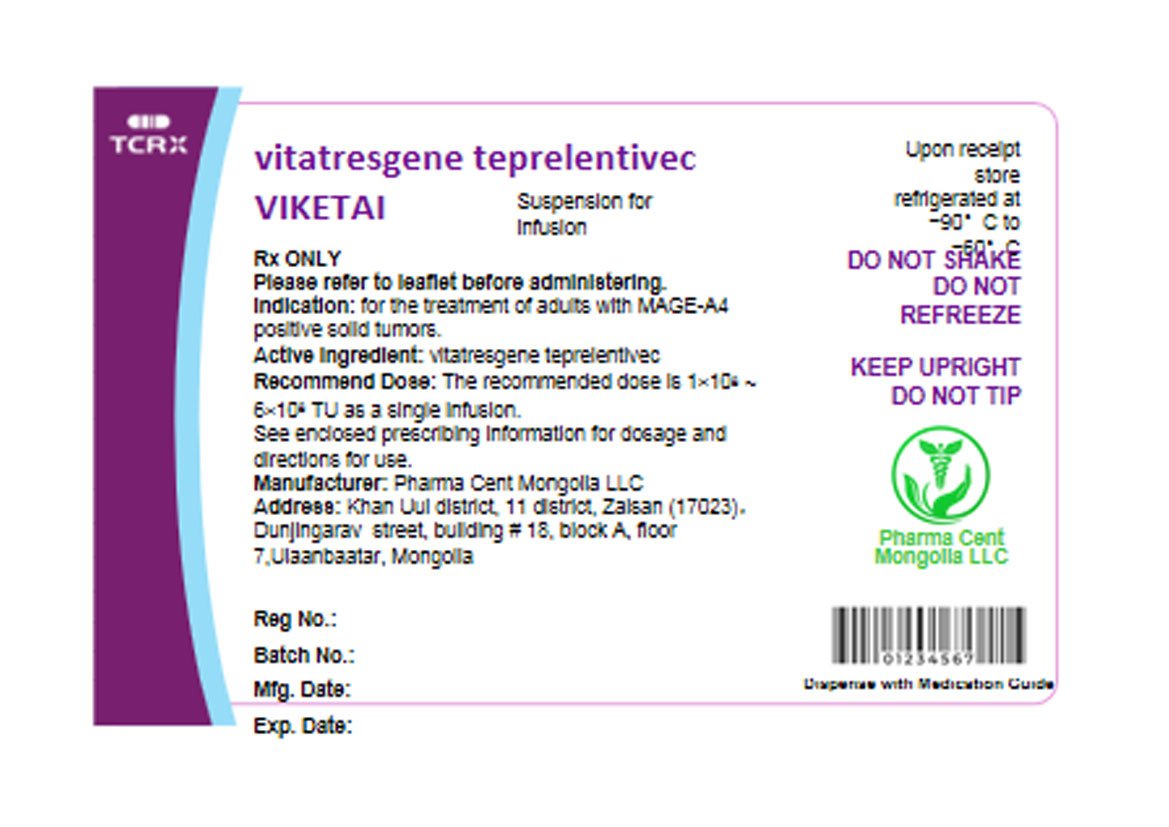
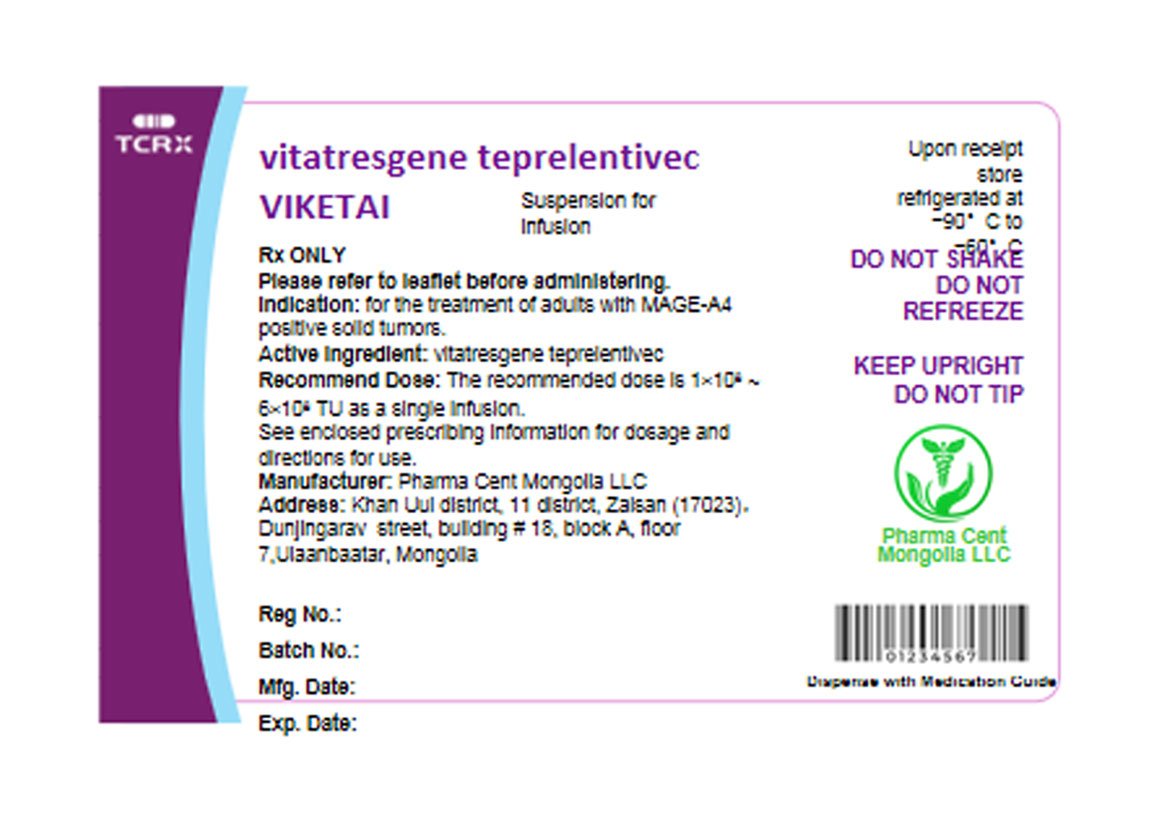
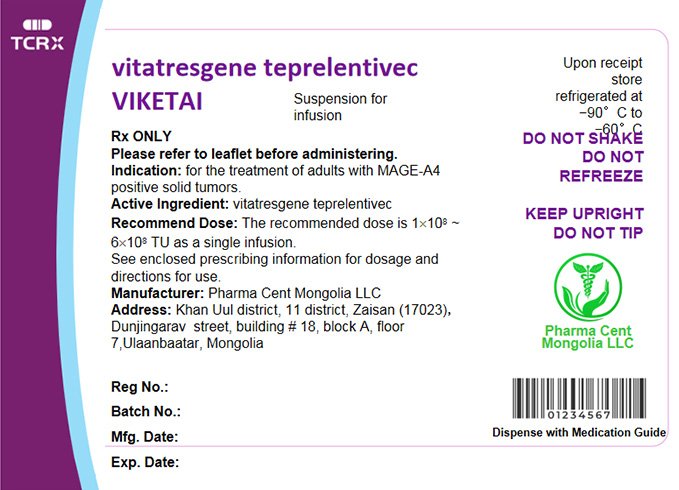
VIKETAI is indicated for the treatment of adults with MAGE-A4 positive solid tumors.
2 DOSAGE AND ADMINISTRATION
2.1 Recommend Dose
The recommended dose is 5 ´ 107 ~ 6 ´ 108 TU as a single infusion.
2.2 Preparation
Receipt of VIKETI
Ensure storage conditions is £ -60°C.
VIKETAI is shipped directly to the healthcare facility in the shipper at temperature £ -60°C.
Inspect the product for obvious signs of damage and contact the manufacturer if any anomalies are identified at the time of receipt.
Transfer VIKETAI in the original packaging to onsite storage at £ -60°C before the shipper expires.
Store VIKETAI in a manner that is consistent with How Supplied/Storage and Handling. If unforeseen circumstances prevent proper storage of VIKETAI consistent with How Supplied/Storage and Handling, contact the manufacturer to arrange for return shipment.
Preparing Patient for VIKETAI Administration
Confirm availability of VIKETAI at the healthcare facility prior to infusion.
Perform HIV testing prior to infusion. DO NOT administer VIKETAI to patients with either CD4+ cell count <200 mm3 or viral load ≥20 copies/mL in case of serological evidence of HIV-1 or HIV-2 infection.
DO NOT administer VIKETAI to patients with current liver-related coagulopathy, hypoalbuminemia, persistent jaundice, or cirrhosis, portal hypertension, splenomegaly, hepatic encephalopathy, hepatic fibrosis, or active viral hepatitis.
Premedication
Premedicate with an H1-antihistamine and acetaminophen according to institutional standard practice, approximately 30-60 minutes prior to VIKETAI infusion.
Avoid prophylactic systemic corticosteroids, as it may interfere with the activity of VIKETAI.
Preparation of VIKETAI for Administration
Personal protective equipment (including gloves, safety goggles, laboratory coat and sleeves) should be worn while preparing or administering VIKETAI.
Prepare VIKETAI for infusion by diluting in 0.9% sodium chloride with 0.25% human serum albumin (HSA).
Preparation of Diluent Solution (0.9% Sodium Chloride with 0.25% HSA)
HSA used for preparation of this product must be commercially available and comply with all local and regional compendia. Either 20% w/v or 25% w/v HSA is recommended.
Calculate the volume of HSA required to achieve a final concentration of 0.25% w/v HSA in a 200 mL final infusion volume.
Calculate the volume of VIKETAI required for the patient-specific treatment.
Calculate the volume of 0.9% sodium chloride required to achieve a final infusion volume of 200 mL when combined with VIKETAI and HSA.
Combine the calculated volume of HSA with the calculated volume of 0.9% sodium chloride in an appropriate intravenous (IV) infusion bag.
Mix the diluent solution gently. Do not shake. Incubate the diluent solution in the infusion bag at room temperature (15 °C to 30 °C [59 °F to 86 °F]) for at least 10 minutes prior to adding VIKETAI.
Product Vial Thawing
Store in the original package to avoid direct sunlight and ultraviolet light exposure.
Store VIKETAI upright in the original package. If cartons or individual vials are tipped over or inverted during storage and handling, place the carton or individual vials back in the upright orientation immediately.
Remove the inner carton from the outer carton.
Thaw VIKETAI vials for 1 hour at room temperature 15 °C to 30 °C (59 °F to 86 °F) in the upright orientation in the inner carton.
Vials may be gently swirled but not shaken or inverted.
Prior to use, ensure that visible ice crystals are not present in the suspension.
The total time at room temperature between removing vials from frozen storage until the beginning of dose preparation should be no more than 3 hours.
Do not re-freeze vials.
Preparation of Suspension for Infusion
Visually inspect thawed product for particulate matter prior to administration. Do not use vials that contain visible particulates. The thawed suspension in the vial should appear clear to slightly opalescent, colorless to slightly brown.
The formulation does not contain a preservative and is for single use only.
Extract the calculated volume of VIKETAI from the vials using aseptic technique and sterile componentry.
Combine the extracted volume of VIKETAI with the diluent solution (0.9% sodium chloride with 0.25% HSA) for a total infusion volume of 200 mL.
Gently mix the suspension for infusion. Do not shake.
The suspension for infusion should be equilibrated to ambient temperature before administration to the patient.
2.3 Administration
Administer VIKETAI in a setting where personnel and equipment are immediately available to treat infusion-related reactions.
Administration of Diluted Suspension for Infusion
Use diluted VIKETAI within 24 hours of dose preparation.
Administer diluted suspension for infusion to the patient as a peripheral IV infusion over approximately 60 minutes (approximately 3 mL/min).
DO NOT administer as an intravenous push or bolus.
DO NOT infuse the diluted suspension in the same intravenous line with any other products.
DO NOT use a central line or port.
In the event of an infusion reaction during administration:
- The rate of infusion may be reduced or stopped to manage the infusion reaction.
- Administer treatment as needed to manage infusion reaction.
- If the infusion is stopped, restart a slower rate when the infusion reaction has resolved.
- If the infusion rate needs to be reduced, or stopped and restarted, VIKETAI should be infused within 24 hours of dose preparation.
After the entire content of the infusion bag is infused, flush the infusion line using local site procedures.
Dispose of any unused product or waste material in accordance with local guidelines for the handling of biological waste.
General Precautions After Handling or Administering VIKETAI
VIKETAI may be transmitted to persons other than the patient receiving the treatment through patient excretions and secretions. Temporary vector shedding of intravenously administered AAV-based gene therapies occurs primarily through urine and feces, and to some extent saliva, mucus, and semen.
To minimize the risk of transmission to other persons, instruct patients regarding proper hand hygiene when coming into direct contact with patient secretions or excretions.
Follow these precautions for 6 months after VIKETAI infusion, especially in the case of pregnancy or immunodeficiency of close contacts.
3 DOSAGE FORMS AND STRENGTHS
VIKETAI is an anti-MAGE-A4 (melanoma-associated antigen 4) T cell receptor (TCR) gene modified T cell therapy for one-time infusion. A single dose of VIKETAI contains 1 ´ 108 ~ 6 ´ 108 TU.
4 CONTRAINDICATIONS
DO NOT administer VIKETAI in patients with active infection(s).
5 WARNINGS AND PRECAUTIONS
5.1 Cytokine Release Syndrome
Cytokine release syndrome (CRS) has been observed following administration of VIKETAI. CRS occurred in 67% of patients at Grades £ 2. Management for CRS (including Grade 1) was tocilizumab.
Ensure that healthcare providers administering VIKETAI have immediate access to medications and resuscitative equipment to manage CRS. Ensure patients are euvolemic prior to initiating the infusions.
During and following VIKETAI administration, closely monitor patients for signs and symptoms of CRS. Following treatment with VIKETAI, monitor patients for at least 7 days at the healthcare facility for CRS. Continue to monitor patients for CRS for at least 4 weeks following treatment with VIKETAI. Counsel patients to seek medical attention should signs or symptoms of CRS occur. At the first sign of CRS, immediately evaluate patient for hospitalization and institute treatment with supportive care based on severity and consider further management per current practice guidelines.
5.2 Immune Effector Cell-Associated Neurotoxicity Syndrome
Immune Effector Cell-associated Neurotoxicity Syndrome (ICANS) has been observed following administration of CAR-T products but not observed in VIKETAI.
At precautious reasons, ensure that healthcare providers administering VIKETAI have immediate access to medications and resuscitative equipment to manage ICANS. During and following VIKETAI administration, closely monitor patients for signs and symptoms of ICANS. Following treatment with VIKETAI, monitor patients for at least 7 days at the healthcare facility for ICANS. Continue to monitor patients for ICANS for at least 4 weeks following treatment with VIKETAI. Counsel patients to seek medical attention should signs or symptoms of ICANS occur. At the first sign of ICANS, immediately evaluate patients for hospitalization and institute treatment with supportive care based on severity and consider further management per current practice guidelines.
5.3 Effect on Ability to Drive and Use Machines
Due to the potential for neurologic events, including dizziness and presyncope, patients receiving VIKETAI are at risk for altered or decreased coordination in the 4 weeks following infusion.
Advise patients to refrain from driving and engaging in hazardous occupations or activities, such as operating heavy or potentially dangerous machinery, during this initial period.
6 ADVERSE REACTIONS
Because clinical trials are conducted under widely varying conditions, adverse reaction rates observed in the clinical trials of a drug cannot be directly compared to rates in the clinical trials of another drug and may not reflect the rates observed in practice.
No serious adverse reactions were observed. The most common adverse reactions were CRS (67%, Grade £ 2).
7 DRUG INTERACTIONS
None.
8 USE IN SPECIFIC POPULATIONS
8.1 Pregnancy
Risk Summary
There are no available data with VIKETAI use in pregnant women. No animal reproductive and developmental toxicity studies have been conducted with VIKETAI to assess whether it can cause fetal harm when administered to a pregnant woman. It is not known if VIKETAI has the potential to be transferred to the fetus and cause fetal toxicity. Therefore, VIKETAI is not recommended for women who are pregnant, and pregnancy after VIKETAI administration should be discussed with the treating physician. Report all pregnancies following treatment with VIKETAI to the manufacturer.
In the U.S. general population, the estimated background risk of major birth defects and miscarriage in clinically recognized pregnancies is 2-4% and 15-20%, respectively.
8.2 Lactation
Risk Summary
There is no information regarding the presence of VIKETAI in human milk, the effect on the breastfed infant, and the effects on milk production. The developmental and health benefits of breastfeeding should be considered along with the mother’s clinical need for VIKETAI and any potential adverse effects on the breastfed infant from VIKETAI or from the underlying maternal condition.
8.3 Females and Males at Reproductive Potential
Risk Summary
Verify pregnancy status of females with reproductive potential prior to starting treatment with VIKETAI.
Contraception
There are insufficient exposure data to provide a recommendation concerning duration of contraception following treatment with VIKETAI.
8.4 Pediatric Use
The safety and effectiveness of VIKETAI have not been established in pediatric patients.
8.5 Geriatric Use
Clinical studies did not include sufficient number of patients aged 65 and over to conclude whether they respond differently from younger patients.
9 DESCRIPTION
VIKETAI (vitatresgene teprelentivec) is an anti-MAGE-A4T cell receptor (TCR) gene modified T cell therapy.
T cells transduced with TCR genes express the TCR on the cell surface. The TCR recognizes an HLA-A*02 restricted MAGE-A4 peptide. MAGE-A4 is an intracellular cancer-testis antigen that has restricted expression in normal tissues and is expressed in multiple solid tumors.
The product must pass a sterility test before release and shipping as a frozen suspension. The product is thawed prior to infusion back into the patient.
10 MECHANISM OF ACTION
VIKETAI is an anti-MAGE-A4 TCR gene modified T cell therapy targeting MAGE-A4 antigens presented by human leukemia antigen (HLA) on the tumor cell surface.
The TCR recognizes an HLA-A*02 restricted MAGE-A4 peptide. MAGE-A4 is an intracellular cancer-testis antigen that has restricted expression in normal tissues and is expressed in multiple solid tumors. Antigen-specific activation via TCR-peptide-HLA complex results in T cell proliferation, cytokine secretion, and killing of MAGE-A4/HLA-A*02 expressing cancer cells.
11 HOW SUPPLIED/STORAGE AND HANDLING
VIKETAI is supplied as a clear to slightly opalescent, colorless to slightly yellow suspension with each mL containing 5 × 10⁷ ~ 6 × 10⁸ TU.
VIKETAI is shipped frozen (−100 °C to −60 °C [−148 °F to −76 °F]) in plastic vials with an elastomeric stopper and plastic snap fit cap with an extractable volume of 1 mL.
Upon receipt, immediately place in a freezer between −90 °C to −60 °C (−130 °F to −76 °F).
Store in the original package to avoid direct sunlight and ultraviolet light exposure.
Store upright in the original package. If cartons or individual vials are tipped over or inverted during storage and handling, place the carton or individual vials back in the upright orientation immediately.
Frozen vials in the inner carton will take up to 1 hour to thaw at room temperature (up to 30 °C [86 °F]). Vials may be gently swirled but not shaken or inverted. The total time at room temperature between removing vials from frozen storage until the beginning of dose preparation should be no more than 3 hours. Once thawed, the medicinal product should not be re-frozen and may be stored refrigerated at 2 °C to 8 °C (36 °F to 46 °F) in the inner carton up to 24 hours.
Following dilution in 0.9% sodium chloride with 0.25% HSA, chemical and physical in-use stability has been demonstrated for 24 hours at 2 °C to 30 °C (36 °F to 86 °F).
12 PATIENT COUNSELING INFORMATION
Advise the patient to read the approved patient labeling (Medication Guide).
Discuss the following with the patient:
- Patients should not donate blood, organs, tissues, or cells for transplantation.
- Male patients refrain from donating sperm, be abstinent or use a male condom for up to 6 months after receiving VIKETAI.
- They should be enrolled in a 15-year registry to evaluate the long-term efficacy and safety of hemophilia treatments.
- Inform patients that following infusion, it will be necessary to be monitored daily at the healthcare facility for at least 7 days for signs and symptoms of cytokine release syndrome (CRS). Patients must remain within proximity of a healthcare facility for at least 4 weeks following infusion.
- Advise patients to seek immediate medical attention if any of the following occur:
o Cytokine Release Syndrome: inform patients that symptoms may include fever, rigors, fast heartbeat, irregular heartbeat, low blood pressure, lightheadedness or dizziness, shortness of breath, nausea/vomiting, diarrhea, and headache.
o Immune Effector Cell-Associated Neurotoxicity Syndrome (ICANS): inform patients that symptoms may include confusion, depressed level of consciousness, delirium, seizures, language difficulty.
o Infections: inform patients that they may exhibit signs or symptoms associated with infection, and that past infections can be reactivated following treatment with VIKETAI
13 EXPIRY DATE
24 months after the date of manufacturing.