1 INDICATIONS AND USAGE
Aprocitentan, in combination with other antihypertensive drugs, is indicated for the treatment of hypertension, to lower blood pressure (BP) in adult patients who are not adequately controlled on other drugs. Lowering BP reduces the risk of fatal and non-fatal cardiovascular events, primarily strokes and myocardial infarctions. These benefits have been seen in controlled trials of antihypertensive drugs from a wide variety of pharmacologic classes. There are no controlled trials demonstrating reduction of risk of these events with aprocitentan.
Control of high BP should be part of comprehensive cardiovascular risk management, including, as appropriate, lipid control, diabetes management, antithrombotic therapy, smoking cessation, exercise, and limited sodium intake. Many patients will require more than one drug to achieve BP goals. For specific advice on goals and management, see published guidelines, such as those of the National High Blood Pressure Education Program’s Joint National Committee on Prevention, Detection, Evaluation, and Treatment of High Blood Pressure (JNC).
Numerous antihypertensive drugs, from a variety of pharmacologic classes and with different mechanisms of action, have been shown in randomized controlled trials to reduce cardiovascular morbidity and mortality, and it can be concluded that it is BP reduction, and not some other pharmacologic property of the drugs, that is largely responsible for those benefits. The largest and most consistent cardiovascular outcome benefit has been a reduction in the risk of stroke, but reductions in myocardial infarction and cardiovascular mortality also have been seen regularly.
Elevated systolic or diastolic pressure causes increased cardiovascular risk, and the absolute risk increase per mmHg is greater at higher BPs, so that even modest reductions of severe hypertension can provide substantial benefit. Relative risk reduction from BP reduction is similar across populations with varying absolute risk, so the absolute benefit is greater in patients who are at higher risk independent of their hypertension (for example, patients with diabetes or hyperlipidemia), and such patients would be expected to benefit from more aggressive treatment to a lower BP goal.
2 DOSAGE AND ADMINISTRATION
2.1 Recommended Dosage
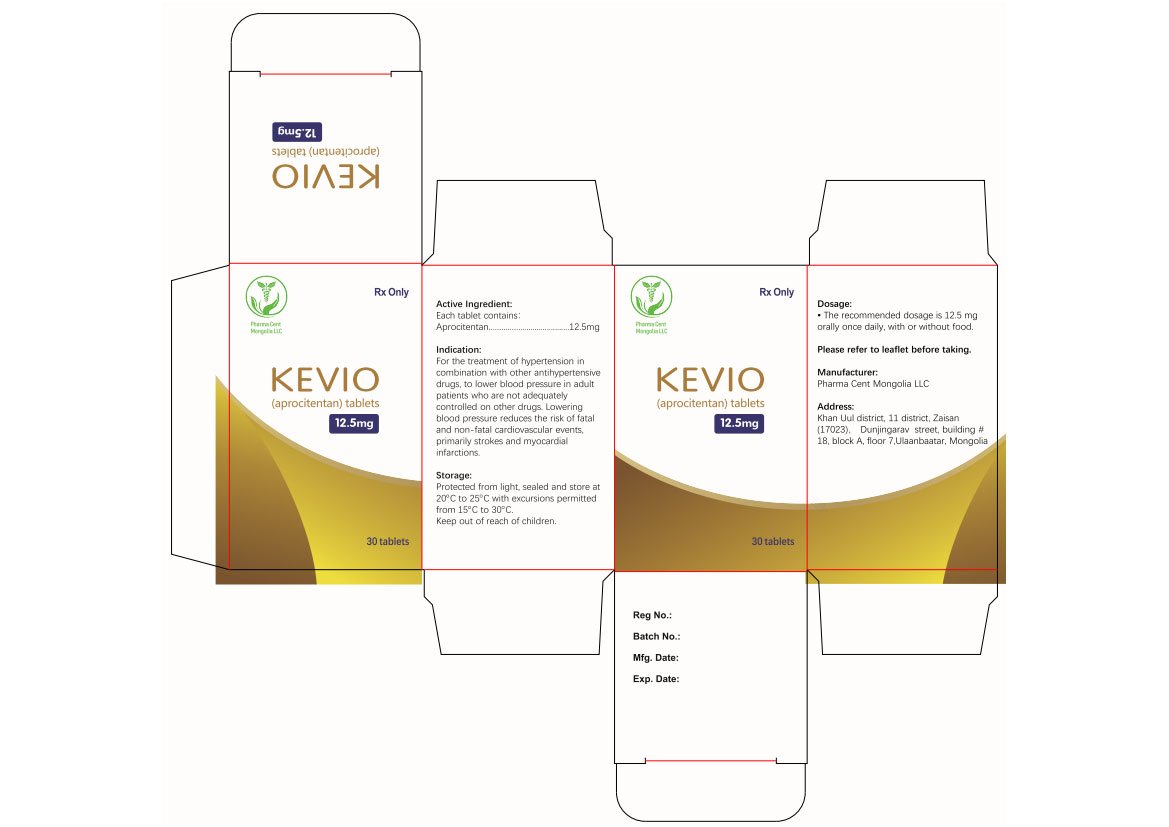
The recommended dosage of aprocitentan is 12.5 mg orally once daily. Swallow tablets whole. Aprocitentan may be taken with or without food.
If a dose is missed, skip the missed dose and take the next dose at the regular time. Do not take two doses on the same day.
2.2 Pregnancy Testing in Females of Reproductive Potential
Initiate treatment with aprocitentan in females of reproductive potential only after confirmation of a negative pregnancy test. Patients should exclude pregnancy with negative pregnancy tests monthly during treatment and one month after discontinuation of treatment with aprocitentan.
3 DOSAGE FORMS AND STRENGTHS
Aprocitentan tablets are available as:
- 12.5 mg: round, film-coated tablet.
4 CONTRAINDICATIONS
4.1 Pregnancy
Use of aprocitentan is contraindicated in pregnancy. To prevent pregnancy, patients who can become pregnant should use acceptable contraception prior to initiation of treatment, during treatment, and for one month after discontinuation of treatment with aprocitentan.
4.2 Hypersensitivity
Aprocitentan is contraindicated in patients who are hypersensitive to aprocitentan or any of its excipients.
5 WARNINGS AND PRECAUTIONS
5.1 Embryo-Fetal Toxicity
Based on data from animal reproduction studies with endothelin receptor antagonists (ERAs), aprocitentan can cause fetal harm when administered during pregnancy and is contraindicated for use in patients who are pregnant. Exclude pregnancy and ensure use of acceptable contraceptive methods prior to initiation of treatment with aprocitentan. Counsel patients who can become pregnant about the potential risk to a fetus. Patients should monitor for pregnancy monthly during treatment and one month after discontinuation of treatment and avoid pregnancy by using acceptable contraception methods prior to initiation of treatment with aprocitentan, during treatment, and for one month after the final dose of aprocitentan. If pregnancy is detected, discontinue aprocitentan.
5.2 aprocitentan REMS
Aprocitentan is available only through a restricted program under a REMS called the aprocitentan REMS because of the risk of embryo-fetal toxicity.
Important requirements of the aprocitentan REMS include the following:
- Prescribers must be certified with the aprocitentan REMS by enrolling and completing training.
- Pharmacies that dispense aprocitentan must be certified with the aprocitentan REMS.
5.3 Hepatotoxicity
Elevations of aminotransferases and hepatotoxicity are known effects of ERAs, including aprocitentan. Elevations in alanine transaminase (ALT) or aspartate aminotransferase (AST) of greater than 5-fold upper limit of normal (ULN) were observed rarely in patients treated with aprocitentan in the clinical trial, including cases with positive rechallenge. There were no reports of patients with ALT and/or AST >3 × ULN and total bilirubin >2 × ULN or cases of liver failure observed in aprocitentan-treated patients in the clinical trials. To reduce the risk of potential serious hepatotoxicity, measure serum aminotransferase levels and total bilirubin prior to initiation of treatment and repeat during treatment periodically and as clinically indicated.
Do not initiate aprocitentan in patients with elevated aminotransferases (>3 × ULN) or moderate to severe hepatic impairment.
Advise patients with symptoms suggesting hepatotoxicity (nausea, vomiting, right upper quadrant pain, fatigue, anorexia, scleral icterus, jaundice, dark urine, fever, or itching) to immediately stop treatment with aprocitentan and seek medical attention.
If sustained, unexplained, clinically relevant aminotransferase elevations occur, or if elevations are accompanied by an increase in bilirubin >2 × ULN, or if clinical symptoms of hepatotoxicity occur, discontinue aprocitentan.
5.4 Fluid Retention
Fluid retention and peripheral edema are known effects of ERAs, including aprocitentan. Edema/fluid retention was reported in 9% of aprocitentan-treated patients compared with 18% of patients receiving aprocitentan 25 mg (twice the recommended dose) and 2% on placebo in the clinical trial, requiring additional diuretic use in some patients. Older age and chronic kidney disease are risk factors for edema/fluid retention with aprocitentan. aprocitentan has not been studied in patients with heart failure New York Heart Association stage III–IV, unstable cardiac function, or with NTproBNP ≥500 pg/mL. aprocitentan is not recommended in these patients.
Monitor for signs and symptoms of fluid retention, weight gain, and worsening heart failure. If clinically significant fluid retention develops, treat appropriately, and consider discontinuation of aprocitentan.
5.5 Hemoglobin Decrease
Decreases in hemoglobin concentration and hematocrit have occurred following administration of other ERAs and were observed in the clinical trial with aprocitentan. Hemoglobin decreases usually presented early, stabilized thereafter, and were reversible after discontinuation. A decrease in hemoglobin of >2 g/dL from baseline was observed in 7% of patients compared to 1% of placebo patients. A decrease to below 10.0 g/dL was observed in 3% of aprocitentan-treated patients compared to 0 patients taking placebo. Initiation of aprocitentan is not recommended in patients with severe anemia. Measure hemoglobin prior to initiation of treatment and periodically during treatment as clinically indicated.
5.6 Decreased Sperm Counts
Aprocitentan, like other ERAs, may have an adverse effect on spermatogenesis. Counsel men about potential effects on fertility.
6 ADVERSE REACTIONS
Clinically significant adverse reactions that appear in other sections of the labeling include:
- Embryo-fetal toxicity
- Hepatotoxicity
- Fluid retention
- Hemoglobin decrease
- Decreased sperm counts
7 USE IN SPECIFIC POPULATIONS
7.1 Pregnancy
Based on animal reproduction studies with other ERAs, aprocitentan can cause embryo-fetal toxicity, including birth defects and fetal death when administered to a pregnant patient and is contraindicated during pregnancy. Administration of macitentan, where approximately ≥50% of total exposure was to aprocitentan, was teratogenic in rats and rabbits at all doses tested. Available data from reports of pregnancy in clinical trials with aprocitentan are insufficient to rule out a drug-associated risk of major birth defects, miscarriage or other adverse maternal or fetal outcomes. Advise pregnant patients of the potential risk to a fetus.
The background risk of major birth defects and miscarriage for the indicated population is unknown. All pregnancies have a background risk of birth defect, loss, or other adverse outcomes. In the U.S. general population, the estimated background risk of major birth defects and miscarriage in clinically recognized pregnancies is 2% to 4% and 15% to 20%, respectively.
There is a Pregnancy Safety Study that monitors pregnancy outcomes in women exposed to aprocitentan during pregnancy.
Data
Animal Data
In embryo-fetal development toxicity studies in pregnant rats and rabbits given macitentan (for which aprocitentan is a major metabolite) during the period of major organogenesis, cardiovascular and mandibular arch fusion malformations were observed at all doses studied. The lowest doses in rats and rabbits produced aprocitentan exposures that were equivalent to and 15-fold, respectively, the clinical exposures at the maximum recommended human dose (MRHD) based on area under the curve (AUC).
In pre- and post-natal development studies, female rats given macitentan (for which aprocitentan is a major metabolite) from late pregnancy through lactation showed reduced pup survival and impairment of the male fertility of the offspring at all doses. The lowest dose produced aprocitentan exposures approximately 2-fold the clinical exposures at the MRHD based on AUC.
7.2 Lactation
There are no data on the presence of aprocitentan in human milk, the effects on the breastfed infant, or the effect on milk production. In rats, aprocitentan was excreted into milk during lactation (see Data). When a drug is present in animal milk, it is likely that the drug will be present in human milk. Because of the potential for serious adverse reactions in breastfed infants, advise women not to breastfeed during treatment with aprocitentan.
7.3 Females and Males of Reproductive Potential
Based on data from animal reproductive toxicity studies with other ERAs, aprocitentan can cause fetal harm, including birth defects and fetal death, when administered to a pregnant patient and is contraindicated during pregnancy.
Pregnancy Testing
Verify the pregnancy status of patients prior to initiating aprocitentan. Patients who can become pregnant should exclude pregnancy with a negative pregnancy test monthly during treatment, and one month after discontinuation of treatment with aprocitentan. The patient should contact their physician immediately if onset of menses is delayed or pregnancy is suspected. If the pregnancy test is positive, the physician and patient must discuss the risks to the patient, the pregnancy, and the fetus.
Contraception
Patients using aprocitentan who can become pregnant should use acceptable contraception prior to initiation of treatment, during treatment, and for one month after discontinuation of treatment with aprocitentan.
Infertility
Other ERAs have shown an adverse effect on spermatogenesis in humans and/or animals. Aprocitentan, like other ERAs, may impair fertility in males of reproductive potential. It is not known whether effects on fertility would be reversible.
7.4 Pediatric Use
The safety and efficacy of aprocitentan in pediatric patients have not been established.
7.5 Geriatric Use
Of the total number of subjects in the PRECISION study of aprocitentan, 321 (44%) were 65 years and older, while 72 (10%) were 75 years and older. Edema/fluid retention was more common in these patients than younger patients.
No dose adjustment is required in patients over the age of 65 years.
7.6 Renal Impairment
Aprocitentan is not recommended in patients with kidney failure (eGFR <15 mL/min) or on dialysis. The effect of kidney failure (eGFR <15 mL/min) or dialysis on aprocitentan pharmacokinetics is unknown. Patients with renal impairment are at increased risk of edema/fluid retention.
No dose adjustment is required in patients with mild to severe renal impairment (Egfr ≥15 mL/min).
7.7 Hepatic Impairment
Aprocitentan is not recommended in patients with moderate and severe hepatic impairment (Child-Pugh class B and C) because these patients may be at increased risk for poor outcomes from hepatotoxicity.
No dose adjustment is required in patients with mild hepatic impairment (Child-Pugh class A).
8 OVERDOSAGE
Aprocitentan has been administered as a single dose of up to 600 mg, and as multiple doses of up to 100 mg daily, to healthy subjects (48 and 8 times the recommended dose, respectively). Adverse events of headache, nasal congestion, nausea, and upper respiratory tract infection were observed. In the event of an overdose, standard supportive measures should be taken, as required. Dialysis is unlikely to be effective because aprocitentan is highly protein-bound.
9 DESCRIPTION
Aprocitentan (aprocitentan) is an ERA. The chemical name of aprocitentan is N-[5-(4-bromophenyl)-6- [2-[(5-bromo-2-pyrimidinyl)oxy]ethoxy]-4-pyrimidinyl]-sulfamide. It has a molecular formula of C16H14Br2N6O4S and a molecular weight of 546.2 g/mol.
The structural formula is:
Aprocitentan is a white to off-white powder that is insoluble in water.
Aprocitentan is available as film-coated 12.5 mg strength tablets for oral administration. The inactive ingredients in aprocitentan are croscarmellose sodium, hydroxypropyl cellulose, lactose monohydrate, magnesium stearate, and microcrystalline cellulose.
The film coating contains the following inactive ingredients: hydroxypropyl cellulose, iron oxide black, iron oxide red, iron oxide yellow, polyvinyl alcohol, silica colloidal hydrated, talc, titanium dioxide, and triethyl citrate.
10 MECHANISM OF ACTION
Aprocitentan is an ERA that inhibits the binding of endothelin (ET)-1 to ETA and ETB receptors.
ET-1, via its receptors (ETA and ETB), mediates a variety of deleterious effects such as vasoconstriction, fibrosis, cell proliferation, and inflammation. In hypertension, ET-1 can cause endothelial dysfunction, vascular hypertrophy and remodeling, sympathetic activation, and increased aldosterone synthesis.
11 HOW SUPPLIED/STORAGE AND HANDLING
11.1 How Supplied
Aprocitentan tablets are available as:
- 12.5 mg: round, light yellow, film-coated tablet.
- Each bottle contains 30 tablets.
11.2 Storage and Handling
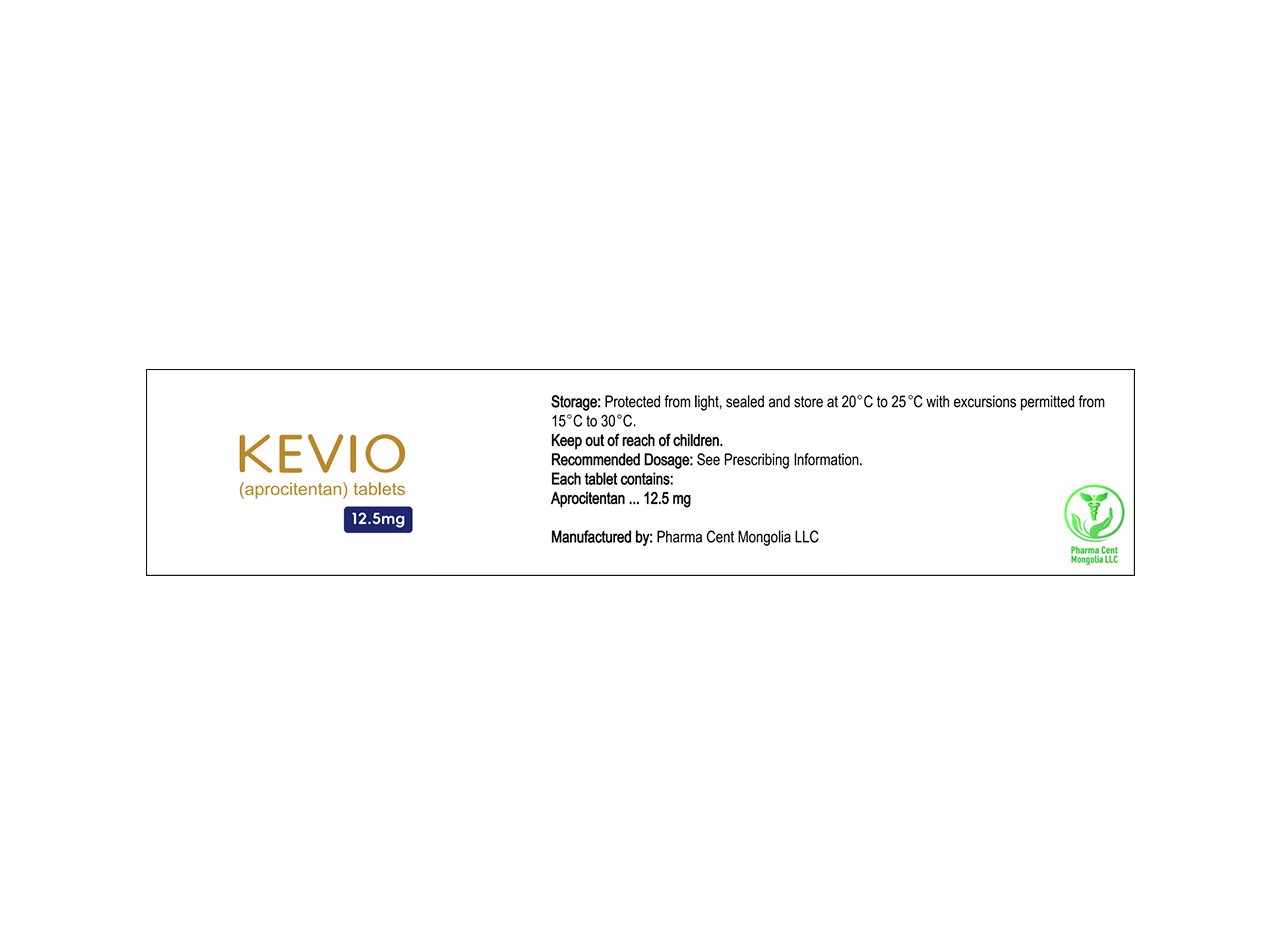
Store at 20ºC to 25ºC (68ºF to 77ºF); excursions permitted from 15ºC to 30ºC (59ºF to 86ºF) [see USP Controlled Room Temperature]. Store in the original package. Dispense to patient in original container only. Replace cap securely each time after opening. Do not discard desiccant. Protect from light and moisture.
12 PATIENT COUNSELING INFORMATION
Advise the patient to read the labeling (Medication Guide). Embryo-Fetal Toxicity Counsel patients who can become pregnant to use acceptable methods of contraception before treatment with aprocitentan, during treatment with aprocitentan, and for one month after treatment discontinuation. Patients who can become pregnant should have pregnancy tests prior to initiation of aprocitentan, monthly during treatment, and one month after aprocitentan discontinuation.
Aprocitentan REMS
Because of the risk of birth defects, aprocitentan is only available through a restricted distribution program called the aprocitentan REMS. Under the aprocitentan REMS, prescribers and pharmacies must enroll in the REMS.
Acceptable forms of contraception include, but are not limited to, IUD, contraceptive implants, tubal sterilization, or a combination of methods (either one hormone method with a barrier method or two barrier methods). Alternatively, if a partner’s vasectomy is the chosen method of contraception, a hormone or barrier method must be used along with this method.
Patients should be instructed to contact their healthcare provider if they suspect they may be pregnant. Patients should seek additional contraceptive advice from a gynecologist or similar expert as needed.
Educate and counsel patients who can become pregnant on the use of emergency contraception in the event of unprotected sex or contraceptive failure.
Advise pre-pubertal females and/or their guardian(s) to report any changes in their reproductive status immediately to their prescriber.
Review the Medication Guide and REMS educational materials with patients.
Lactation
Advise females not to breastfeed during treatment with aprocitentan.
Hepatotoxicity
Educate patients on signs of hepatotoxicity. Advise patients that they should contact their healthcare provider if they have unexplained nausea, vomiting, right upper quadrant pain, fatigue, anorexia, jaundice, dark urine, fever, or itching.
Fluid Retention
Educate patients on signs of fluid retention. Advise patients that they should contact their healthcare provider if they have unusual weight increase or swelling of the ankles or legs.
13 EXPIRY DATE
24 months after the date of manufacturing.